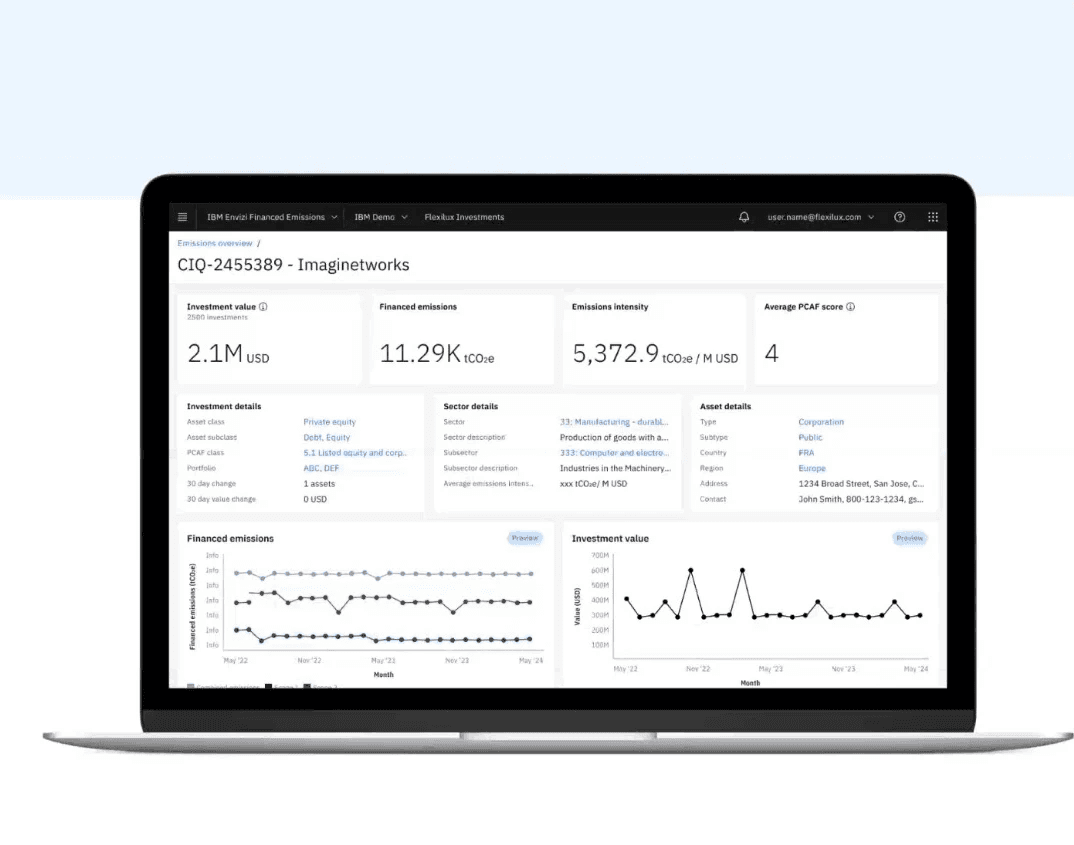
Making ESG Reporting Actionable for Financial Institutions
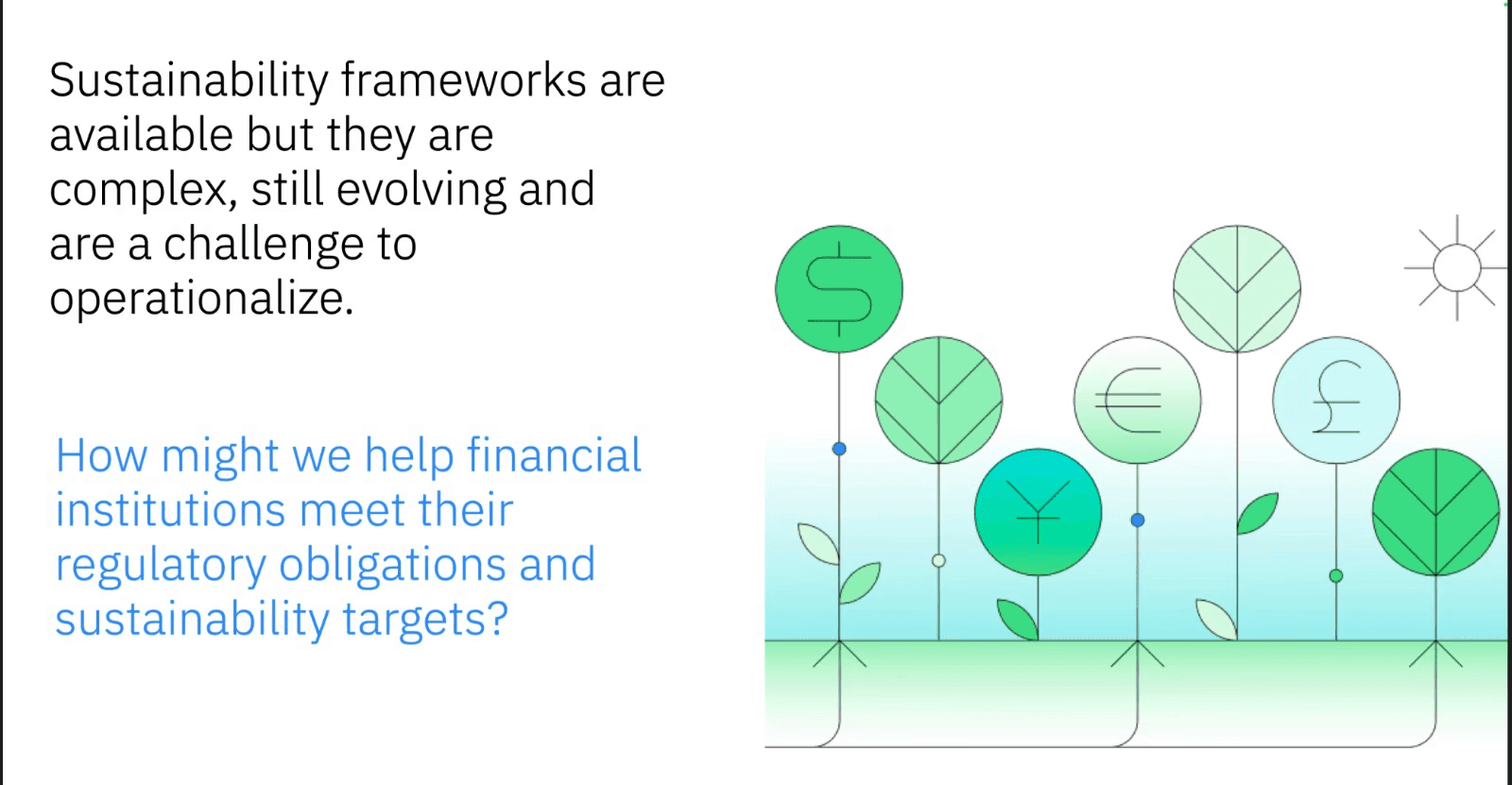
Banks and financial institutions must disclose their financed emissions (Scope 3, Category 15) to comply with frameworks like SBTi and PCAF. The existing tool was complex, full of regulatory jargon, and lacked clear workflows. • Analysts struggled to map portfolio data into disclosure frameworks. • Input validation was minimal, leading to inconsistent or rejected submissions. • Users had no clear way to benchmark results against industry peers.
Business problem
For IBM, failure to simplify financed emissions meant risking credibility in the most high-value sector: finance. These clients have the highest regulatory scrutiny and the deepest budgets.
For users, the pain was acute: without accurate financed emissions reporting, banks faced regulatory fines, loss of investor trust, and reputational harm.
How my model addressed it
I redesigned the workflow with a focus on guided compliance, validation, and comparability.
Guided Input Flows
Step-by-step process aligned directly with PCAF categories.
Simplified jargon into business-friendly language.
Validation Logic
Built-in error flags for incomplete or inconsistent entries.
Smart prompts to reduce missed fields.
Comparability Dashboards
Clear visualization of portfolio emissions vs. industry benchmarks.
Enabled executives to understand not just “what we emit,” but “how we stack up.”
How it impacted business
For enterprises:
40% reduction in time required to prepare financed emissions disclosures.
Higher accuracy rates reduced the likelihood of audit pushback.
Analysts gained confidence in presenting numbers to regulators and boards.
For IBM:
Positioned Envizi as a serious contender for finance-sector ESG reporting.
Enhanced IBM’s value proposition in the high-stakes financial services market.
Strengthened cross-selling potential with banks needing multi-module solutions.
What are the consequences of taking actions through this model?
Positive Consequences:
Faster, cleaner disclosures improved client satisfaction and retention.
Reduced audit risk gave IBM clients more confidence to adopt AI-based solutions.
By embedding compliance logic, IBM built credibility as a trusted ESG partner.
Strategic Consequences:
Solidified IBM’s ESG tools as “boardroom ready” for financial executives.
Differentiated the product in a crowded ESG tech market.
Missed Consequence if ignored:
Without redesign, IBM risked being sidelined by competitors who simplified compliance better, losing critical finance-sector contracts.